Decoding Integration Protocols for Multi-Vendor Casino Software Ecosystems
Harper Zimmermann · Oct 30, 2026
Decoding Integration Protocols for Multi-Vendor Casino Software Ecosystems
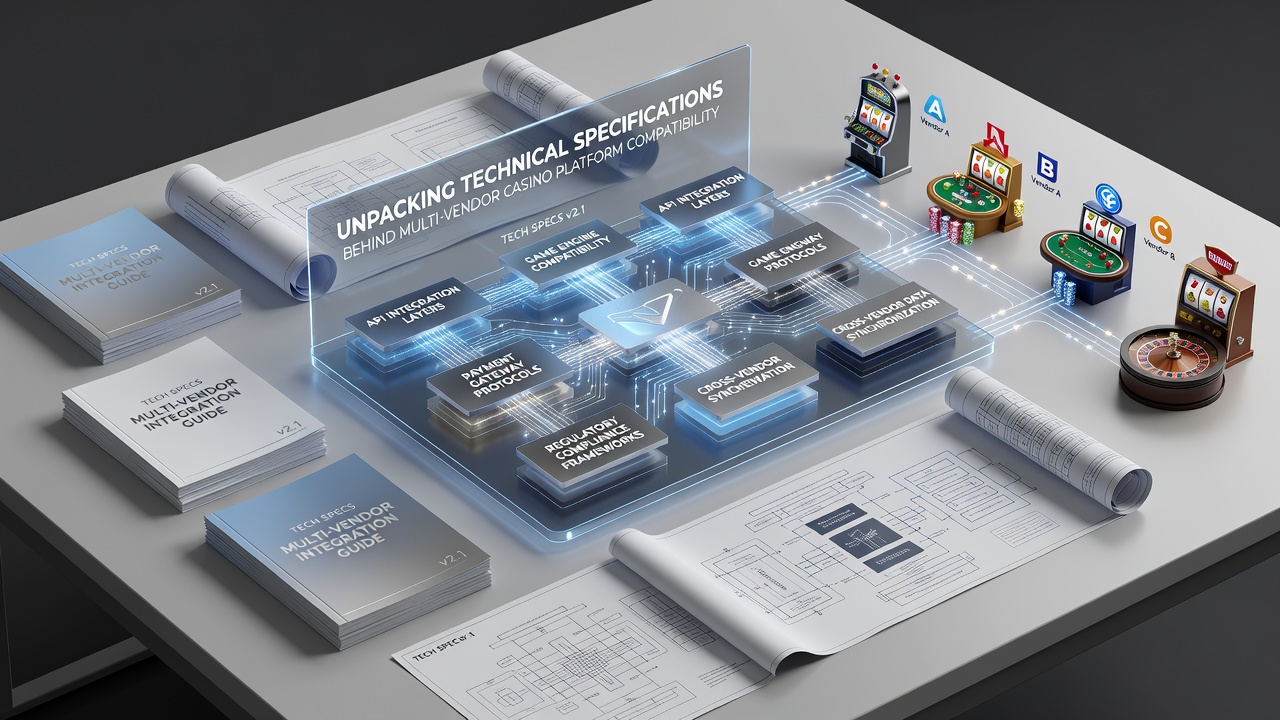
Multi-vendor casino platforms rely on precise technical specifications that allow games, payment systems, and management tools from different providers to operate within a single environment without conflicts or data loss, and these specifications cover everything from data exchange formats to certification requirements that regulators enforce across jurisdictions.
Core API Frameworks and Data Exchange Standards
Developers build compatibility around standardized application programming interfaces that use RESTful endpoints combined with JSON payloads, while some platforms incorporate GraphQL for more flexible queries that pull real-time game data and player session metrics, and these interfaces must support both synchronous calls for immediate responses and asynchronous webhooks that notify systems about events such as bet placements or jackpot triggers.
Protocol specifications often reference OpenAPI definitions that detail every endpoint, parameter, and response code, which reduces integration time when a new game supplier joins an existing operator network, and observers note that consistent use of OAuth 2.0 with JWT tokens handles authentication across vendors while maintaining session security throughout the connection lifecycle.
Security Protocols and Encryption Requirements
Encryption standards require TLS 1.3 for all data in transit, and vendors must implement AES-256 for stored player information along with tokenization methods that replace sensitive card details before they reach the central database, and these measures align with requirements set by bodies such as the Nevada Gaming Control Board that audit platform configurations on a regular schedule.
Access control lists and role-based permissions further segment data so that one vendor cannot view another supplier's proprietary game logic or financial summaries, and penetration testing conducted by independent firms verifies that these boundaries remain intact under simulated attack conditions.
Game Certification and RNG Validation Processes
Random number generator modules undergo evaluation by laboratories including Gaming Laboratories International, where statistical tests confirm uniformity and independence across millions of simulated outcomes before any title receives approval for deployment, and once certified the RNG must remain unchanged unless a new audit occurs after an update.

Game aggregation layers translate between each vendor's unique return-to-player calculation methods and the operator's unified reporting dashboard, which means teh central system records every spin or hand in a standardized format that regulators can review without needing separate tools for each provider.
Payment Gateway and Wallet Synchronization
Payment integrations depend on ISO 20022 message formats for transaction details along with real-time balance reconciliation APIs that prevent discrepancies when players move funds between casino sections operated by different vendors, and these systems must handle multiple currencies while applying jurisdiction-specific tax calculations automatically.
Wallet services expose endpoints that allow instant queries for available balance, pending transactions, and withdrawal limits, and data shows that platforms using these unified specifications reduce settlement errors by measurable percentages according to internal operator reports.
Regulatory Alignment Across Regions
October 2026 marks the scheduled rollout of updated technical guidelines from the Australian Communications and Media Authority that emphasize enhanced logging requirements for all multi-vendor interactions, and similar updates appear in draft documents from Canadian provincial regulators that focus on cross-border data residency rules.
Compliance teams maintain version-controlled documentation that maps each specification to the corresponding regulatory clause, which simplifies audits when inspectors request proof that every connected vendor meets the same baseline for fairness and security.
Conclusion
Technical specifications that govern multi-vendor casino platform compatibility continue to evolve as new providers enter the market and regulatory expectations shift, yet the underlying principles of standardized APIs, rigorous encryption, certified RNG modules, and synchronized payment systems remain the foundation that allows diverse software components to function together reliably.